Creating Equitable Spaces

Environment Sustainability and Climate Resilience

Environment Sustainability and Climate Change/Resilience

Environment protection and conservation is in the genesis of Econet’s establishment.  Community development of all communities, and particularly the Adivasis and the Nomad Tribes is rooted in the access, ownership and management of natural resources – land, forests, water and mineral deposits. There is no sustainable development for these social groups without measures put in place towards recognition, exercise and fulfillment of their social, political, economic and cultural aspirations and entitlements. ECONET believes that People and Communities are at the centre of any policy or action towards environment protection or ecological conservation. All the initiatives and programme strategies evolved over the years of experience of ECONET the communities and youth, women, farmers belonging to tribal, PVTGs, non-pastoral nomads and denotified tribes were always placed at the leadership of different projects, campaigns, innovations, policy engagements and institutional processes

Energy Security

ECONET’s work with the tribal communities goes back to its inception as an ecological networking organisation. Tribal communities, their culture and their aspirations of development have a very symbiotic relationship with the organisation and all efforts, initiatives it undertakes across Maharashtra. ECONET primarily works with tribal in the Schedule V areas, where they are in the primary and in large number, and geographical the area is surrounded by forest dependent ecosystem. In the 90s and early 2000 forest conservation, forest protection, control and management of the natural resource management, entitlements under the Forest Rights Act, the Biodiversity Act and under the PESA provisions had remained the core thematic focus of ECONET. With the debates across the country about energy security and participation of communities in its management, ECONET studied scope and relevance of Energy Security in the context of tribal development and natural resource management. The deficit in rural energy security was noted as a critical issue and that in the tribal areas where the organisation works, it was the issue of entitlement as well as access and management. In 2012 ECONET initiated a programme intervention centred at energy security in the tribal areas where due to terrain and other marginalisation of the community, dependence on the firewood had been enormous. Finding and implementing various models of intervention through community’s participation to secure their energy needs through control and management of locally available natural resources; and simultaneously inculcating the sustainable practices among community to ensure forest resources are not depleted. Organisation’s initiative on the Energy Security begins with community participation and community ownership. Different energy efficient practices were explored & tested, before ECONET decided to promote the two – Improved Cook Stoves (ICS) and Biogas. Skill training to the villagers on different energy efficient practices resulted in fulfilling community energy needs while securing the natural resources on another hand. Different studies were done to testify the results, which showcased the improved efficiencies of cook stove and firewood saving. Women leadership in this whole process towards energy security has been significant.

Sustainable Farming/Agriculture
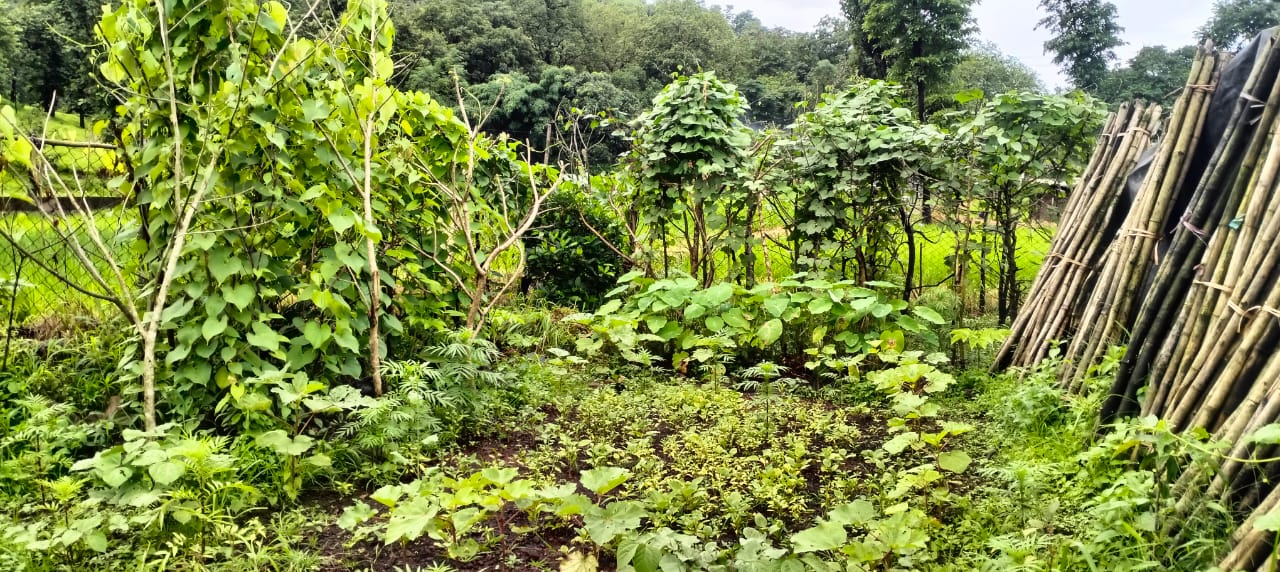
Tribal groups such as Kolam, Thakar, Kokana, Korku, Pawara, Bhil, Gond where ECONET works in the blocks of Nasik, Nandurbar, Amaravati, Nanded and Yavatmal have been cultivating the forest land they secured as Community Forest Right and/or Individual Forest Right. A very small number of tribal had owned the agriculture land till their ownership over as traditional forest dwellers was recognized under the Forest Rights Act, 2006. Available data shows that a significant portion of India’s tribal population is engaged in agriculture, with estimates suggesting that around 87% of the main workers from Scheduled Tribes communities are involved in primary sector activities like cultivation and agricultural labour, indicating a heavy reliance on agriculture within tribal communities.In Maharashtra, about 85% of tribal people are involved in agriculture. This includes 40% farmers and 45% agricultural labourers. Higher dependency on forest, agriculture makes them more vulnerable when natural calamities occur. With the small land holdings and increasing cost of production, over the decades the traditional farming methods were replaced by the agri-technology and chemical fertiliser based agriculture. Current agricultural practices involve high yielding seeds, cultivation of hybrid varieties, increased use of chemical fertilizers, monocropping, cash crops and other methods which can give immediate and high profits but have long term consequences. Depleting soil fertility, water scarcity, and biodiversity loss threaten agricultural sustainability as well as it results in adverse impact on health and general well being humans. Changing climatic conditions are deeply impacting on this sector and subsequently making farmers vulnerable. Econet has mapped these challenges, gaps, and practices from ground and decided to work on climate resilient agriculture practices. With an aim to build the community resilience towards reducing the impacts of climate change on agriculture and aligned sectors organization started thriving on this issue.
Looking at the scenario it is very much important to minimize the impacts of climate change to ensure the food as well as livelihood security. Traditionally communities have always found the ways to fight against such challenging situations, however market driven commodities production pattern has dragged them into insecure practices. Organization is focusing on mapping the cultural and traditional farming practices, which would help the tribal farming community to fight against the impacts of climate change. It is very essential to combine science-based innovations and traditional practices to bring the positive change in current practices which ultimately lead to reduce the negative impacts of climate change. The organisation has carefully studied various techniques and strategies of organic farming and sustainable agriculture, experimented by many with positive results. Women always play a pivotal role in traditional farming. The modern agriculture methods denied women their ownership and control over natural resources. Seed bank, Conservation of indigenous varieties of crops, plants, trees, etc, Kitchen Gardens, Bio or non-chemical fertilisers, pesticides, natural methods of soil rejuvenation – all of these expected women to be the change agent. ECONET’s efforts therefore have been to mobilise and to organise women and youth from the tribal communities to reclaim their spaces in the economic and political institutions. Women collectives and the Youth groups in the villages where the organisation is working with the tribal farmers, are complementing the efforts to reduce the input costs, bring improved soil heath, enhanced productivity, conservation and promotion of native varieties, reduced carbon footprint, increased carbon sink, water conservation, etc alongside the farmers groups.

Bio Diversity and Conservation of Indigenous Varieties

Usually it is based on the geographical attributes and proximity, the fertility and sustainability of the local seeds and indigenous species increases. Same time still farmers in the tribal and rural areas are seen engaged in the traditional conservation methods & practices in relation to the seeds and crop varieties, and they often have received positive results through their agriculture produce. However due to the climate change impacts experienced through irregular or torrential or untimely rains, degradation of the soil quality, temperature instability, the seeds what could give yield in a short time have become popular among the farming community. Result has been loss of nutrients and quality of the agriculture produce – paddy, grains, millets, pulses, root vegetables, tubers, vegetables and fruits, etc and increased use of chemical fertilizers to keep up with the competition in the market for high yield. Bio diversity is inclusive of all these. ECONET after great deal of observations and study realized that agriculture sustainability and bio diversity are closely linked scenarios. There is no one over the other, rather the two going hand in hand. Sustainable agriculture is the context that ECONET works on with the tribal farmers in PESA and non PESA areas. Marginal or small land holdings are manipulative to buy in the farmers for the non organic, chemical fertilizer dominant farming methods and practices. And unless we save, conserve and protect the local bio diversity the climate change impacts in the agriculture would continue to destroy dreams of all farmers. Promotion of organic farming, conservation of indigenous seeds and crop varieties, documentation of traditional practices of seed conservation, promoting traditional farming practices using natural fertilizer or bio mass, mobilizing farmer groups, grooming women and women farmers as role models and nonetheless guiding the community to document, conserve and protect the local bio diversity. Localised or indigenous seeds and traditional farming techniques are the best solutions to overcome the adverse effects of climate change – these are key strategies that ECONET is implementing with the tribal and non tribal farmers living in the vicinity of forests or plain land.

© Copyright 2025 ECONET. All rights reserved. Designed & Maintained with ❤️ by Savitar Solutions Group