Creating Equitable Spaces

NT & DNT and Vulnerable Groups

NT & DNT and Vulnerable Groups

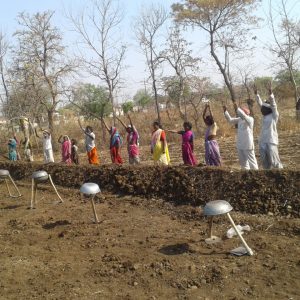
Nomad and Denotified Tribes, known as NT & DNTs or at the state administration/policy level VJNTs are victims of historical discrimination and marginalization. This has taken place at multiple levels – social, political, legal and cultural resulted in perpetuating poverty, illiteracy, landlessness, injustice and inequalities, systemic violence and stereotyping and making them invisible on the political and economic level. Educated youth and women from the NT & DNTs have a lot of potential and aspiration to pull their communities out of marginalization. ECONET pioneered in the efforts towards changing the lived realities of the NT & DNTs in Maharashtra

Youth and Women Leadership Programme

NT & DNT communities are the most vulnerable and historically marginalized people. They had to be “freed” despite the country became free or independent of the 150 years British Rule. It was only in 1952 when the NT & DNTs were granted their human dignity and equality as enshrined in the Constitution. Even now Education, Employment, Health, Livelihood, Housing, Civic amenities, Drinking Water, Food security and importantly, access to justice – of legal remedy and of legal empowerment ….all these entitlements guaranteed in the Constitution of India yet to become a lived reality for the DNTs, who were branded by the then British government as “Criminals”. ECONET believes that for the DNTs and NTs to break away from the historical exploitation and injustice, the key agency is the leadership of DNT youth and women. They are the ones who shall hold the lantern of change. Youth Leadership programme mobilizes the young boys and girls from the DNT community with an inner drive to change the historically lived realities of DNTs. Youth with ideas, aspiration goals, commitment towards the change process, and more so who are grounded in the community socially, culturally and keen to make the shift on the economic, educational and political aspirations for the DNTs. Women in the DNTs are subjugated by the family and community/clan patriarchy at the most unjust and inhumane manner. The “Clanship” mentality within the community controls every aspect of a woman’s life, and when she transgresses from the predetermined path, she is punished the most cruel and unequal way. Historical invisibility of DNTs added multiple complexities for the women in terms of education, health, livelihoods, access to institutions, participation and legal justice. Women Leadership Programme aims to identify such women who are willing to take the risk of frontline changemakers for the whole community, and to begin with for DNT women they know of and are connected with. Women leaders in the programme ensure that no NT & DNT woman is denied of justice – political, social, economic, legal and educational. Both the Youth and Women Leadership programme showcase that the NT & DNTs can lead their own struggles, they do have their own voice and they can come together despite the diversity within of vulnerability and of political identity. They may not align with the mainstream models of progress, growth and development, and perhaps they need not. Young men and women groomed as leaders work on their own models of change and models of development which values, add and protects the human dignity and socio-political & cultural identity of the NT & DNTs.

Community Centric Models

Imagine a community where every voice is heard, every right is understood, and every individual has the power to shape their own future. This is the vision driving the Community Centric Model (CCM). TheCommunity Centric Model (CCM) is an innovative, community-driven approach designed to empower marginalized communities by enhancing their awareness of rights and entitlements. Led by Econet field workers in collaboration with active community members, CCM facilitates access to citizenship proofs, government schemes, and collective mobilization efforts through the establishment of Samuday Adhikar Kendra. These centers serve as hubs for information, advocacy, and service delivery, enabling individuals to take charge of their development, engage in the democratic process, and address local challenges collectively. By fostering self-reliance and transparent governance, CCM lays the foundation for sustainable, well-informed, and thriving communities.

Community Leadership Programme (Paralegal and Nomad Resource Centre)

Nomad Resource Centre (NRC) is a platform evolved from the work of ECONET with the NT & DNT communities and various local CBOs and NGOs working with them. NT & DNTS at taluka and district places. Through the NRCS Econet aims to reach out to different NT & DNT communities namely, Pardhi, Phasepardhi, Dhangar, Wadar, Ramoshi, Kaikadi, Nandiwale, Kolhati, Kolhati Dombari, Laman/Banjara, Dombari, Beldar, Vaidu, Gondhali, Gosavi and Gavali. The thematic focus of NRCs is Education, Livelihood, Employment access, Gender Equality, Human rights and protection of constitutional rights, access to justice and legal aid/legal remedy, Citizenship rights, Participation in the democratic and electoral processes, Health, Land rights and Entitlement and access to development schemes and programmes of central and state governments. ECONET and CBO hosting the NRC aim to build and demonstrate collaborative and collective leadership through the initiative. NT & DNT community hold important role in the running of NRCs. The paralegal workers and volunteers at these NRCs are identified and selected from the community, and they are expected to go through a phase-wise training and strict planning and monitoring process.

Collaboration and Collective Leadership
NRCs are intended to do collaborative work of ECONET with the local CBOs, volunteers and paralegals. Non-Discrimination, Social Inclusion and Sustainable Development being the core focus of these NRCS, this programme is expected to achieve following outcomes: Empowered NT & DNTs in matters of their legal and constitutional rights Increased participation of NT & DNTs in democratic processes (electoral and non-electoral), particularly, at the Panchayat Improved understanding within these communities on various welfare and development schemes, programmes and policies

Effective access and exercise by NT & DNTs of their right to seek economic justice – livelihood and employment opportunities.

NRCs are intended to motivate and mobilize other stakeholders including governmental and non-governmental/private towards securing human rights and sustainable development of NT & DNTs. It is hoped that the partnership between 9 ECONET and CBOs for NRCs will build a network of volunteers, local lawyers, researchers, experts, social activists, academicians, police, community elders, government officials, elected representatives and others to ensure the NT & DNTs are no longer remain outside of fringes of development and justice – social, political and economic.

© Copyright 2025 ECONET. All rights reserved. Designed & Maintained with ❤️ by Savitar Solutions Group